
Many SaaS products fail before development because founders start building without validating the customer, problem, demand, MVP scope or path to value. These six mistakes create unnecessary features, technical debt and products nobody asked for
Meet Sam.
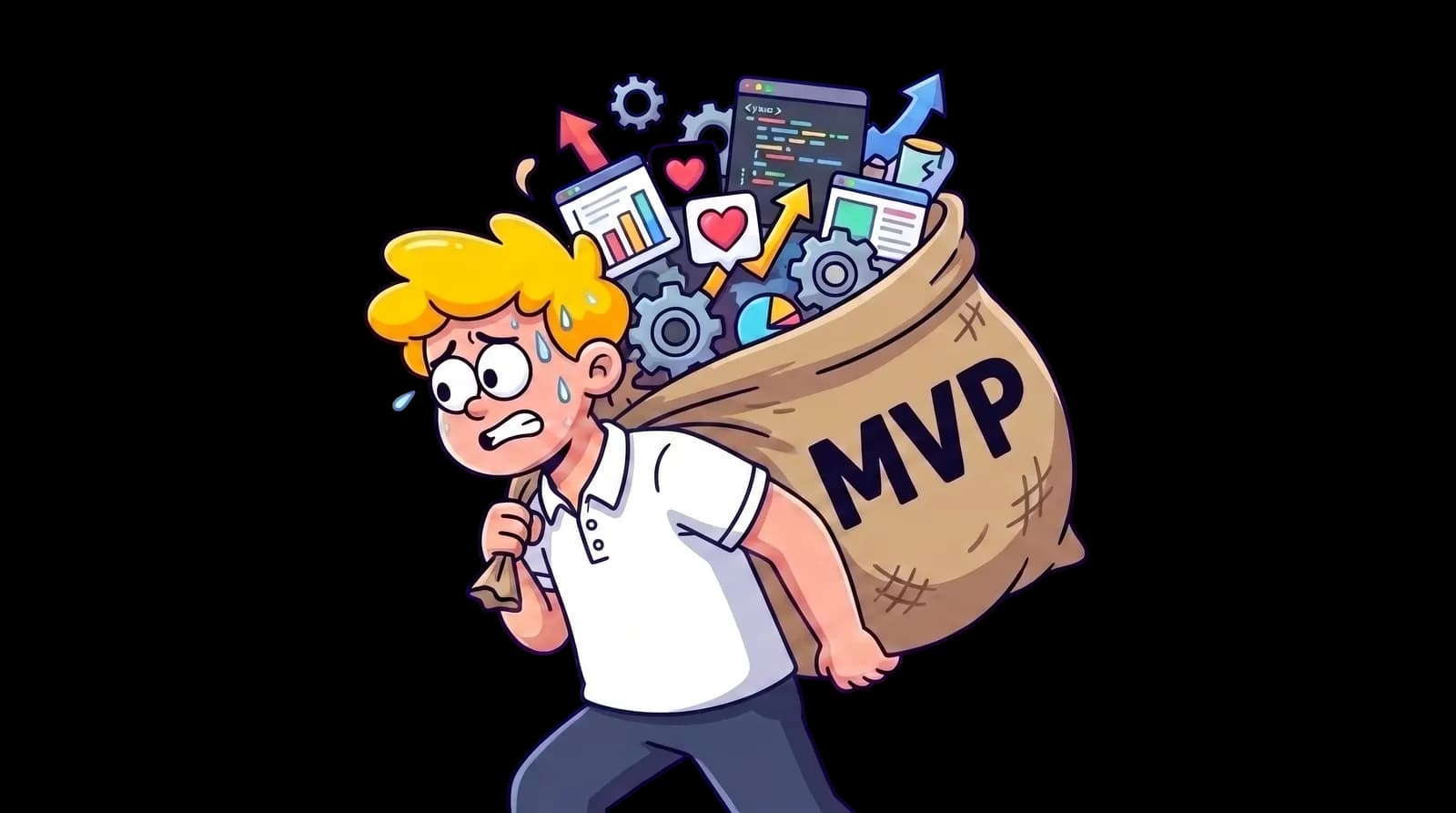
Sam is four months into building. Over his shoulder is a sack marked ‘MVP,’ and it is much heavier than it was supposed to be. Inside it: half-written code, three dashboards, an analytics view nobody asked for, an integration copied from a competitor, and a growth chart pointing confidently upward at nothing.
The sack has been patched and re-stuffed so many times that minimum stopped being an accurate word for it a long time ago.
Now look at what is not in the bag. There is no customer in there.
Sam is not lazy and he is not stupid. He is doing the thing that feels most like progress.
Who is this actually for? What is the problem costing them today? Why would they change what they already do? What is the smallest thing that would prove the idea?
When those questions stay open, development does not remove uncertainty. It converts uncertainty into screens, database tables and technical debt.
The code gets written later. The failure happens first.
Why Sam started building too early
Because building is visible. A finished screen can be demonstrated. A deployed app feels more real than ten customer interviews and a positioning doc.
If Sam is technical, code is where he feels most in control, far more than in pricing conversations or cold outreach.
AI has made premature building easier. Sam can now generate a working prototype in a weekend, but that only proves the product can be built, not that people understand it, trust it or will pay for it.
Speed only helps when the direction is right.
And getting the prototype working creates a second challenge: determining whether it is actually ready for real users. We cover that separately in How to audit an AI-built product before launch.
The six mistakes Sam made before writing a line of code
1. He Started With a Solution Instead of a Customer Problem
Sam's pitch: "An AI platform that helps businesses manage everything in one place."
Which businesses? Manage what? How often does it go wrong? What does it cost them when it does?
Now compare with this:
The second one names who has the problem, what actually breaks, and where it breaks. It might still turn out to be wrong, but you can go and check it this week. Sam’s version is too vague to test with real customers. It can only be built.
That is the real difference. A problem gets tested. An answer just gets built.
Write the problem in one sentence: ‘[This exact type of customer] can’t [complete this job] because [this obstacle], costing them [time, money, or opportunity].’
2. He tried to build for everyone
"Startups." "Business owners." "Marketing teams." Those are not real groups of buyers. Two startups can work in completely different ways, spend different money and want different things.
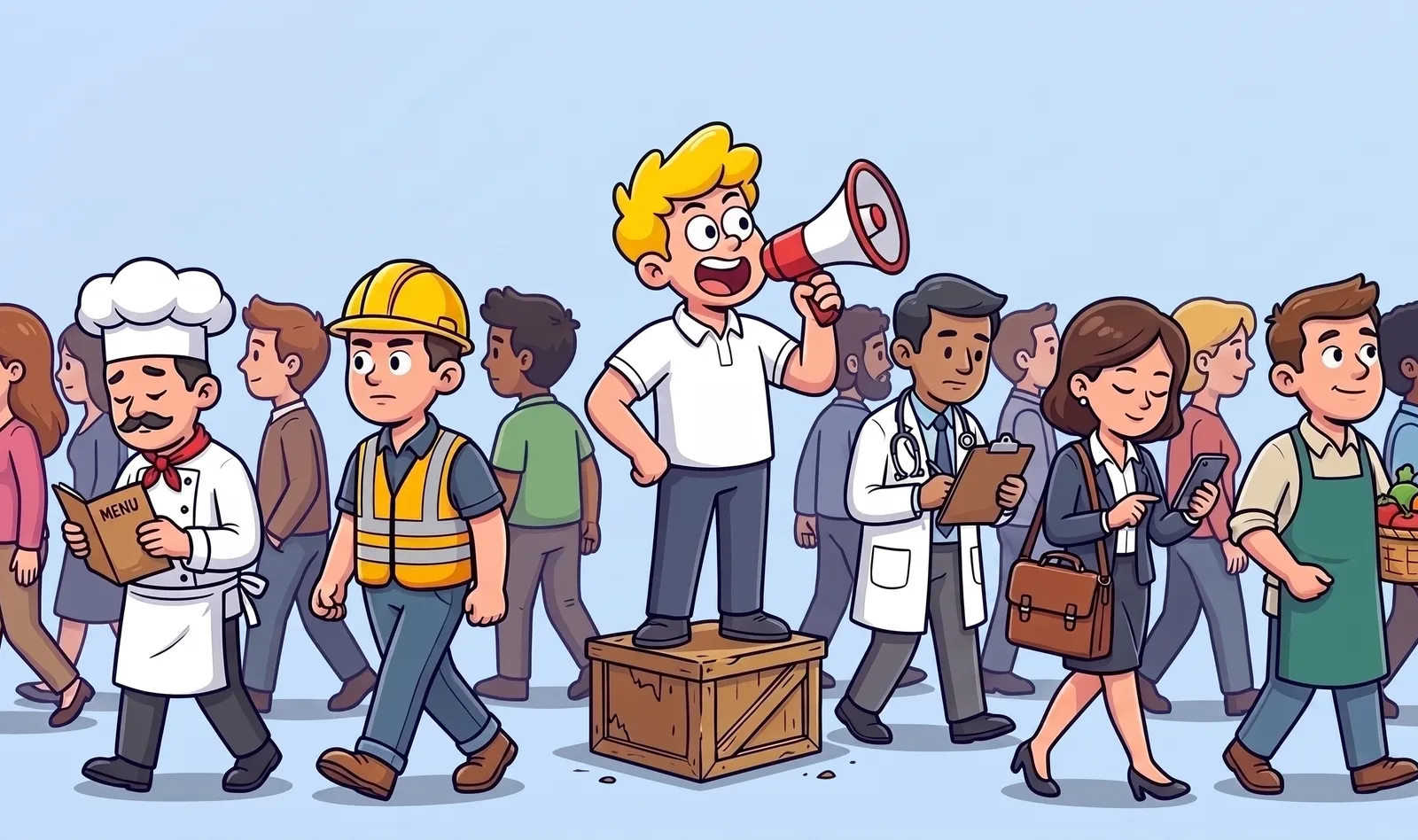
Target everyone and the product quickly loses focus. The homepage says nothing clearly and the to-do list keeps growing, because each group asks for something different.
Pick one narrow group their job, their industry, their size, their problem, and the moment that sends them looking for help.
You're not deciding who you'll sell to forever. You're deciding who you'll learn from first.
3. He Treated Positive Feedback as Product Validation
Sam asked twelve people "Would you use this?" Eleven said yes. Nobody has paid him.
People are nice about ideas that don't exist yet. Saying yes costs them nothing.
Ask about the past, not the future. When did this last happen to you? What did you do about it? What did you use? How long did it take? Have you ever paid to solve it? Who has to approve that spend?
Real proof looks like a mess they've already built to cope with it, money they've already spent, and a problem that keeps coming back.
4. He Built a Smaller Version of the Entire Product
Scroll back up to the sack Sam is carrying. This is what's inside it.
Sam's "smallest possible" build has log-ins, billing, an admin panel, charts and integrations. That is not a test. That is a small finished product and every piece of it is something he decided to build, not something anyone asked him for.
Stop asking, ‘What is the least we can build?’ Ask, ‘What do we most need to learn?’ A real first version has one user, one problem, one job, and one thing it's meant to prove. Often the fastest way to learn is to do the work by hand for a few people first.
5. He Studied Competitors Instead of Customer Behaviour
Sam studied three funded competitors. He never asked his customers what they use today.
The honest answer is usually a spreadsheet, a WhatsApp group and someone who checks both every morning. That setup is free. Everyone already knows how it works. It is tangled into how the team runs.
Ask people to walk you through what they do now, step by step. Find out what it costs them and what would have to be true for them to drop it. If nobody can tell you why they'd switch, you don't have a product yet.
6. He Never Defined the User’s Path to Value
Sam can tell you everything his product does. He can't tell you what a new user does in their first ten minutes, or the moment they think, ‘Oh, this is actually useful.’
Pop-up tips and welcome tours can't rescue a product that doesn't make sense.
Don't be Sam: before you design a single screen, write down the path: Trigger → sign-up → setup → core action → first value → reason to return.
What Sam should have had before development
Not a hundred-page strategy document. Just enough to spend the next month sensibly:
- A clearly defined first customer segment.
- Evidence that the problem is frequent, costly and already being worked around.
- A focused first version designed to test the riskiest assumption.
- A clear path from sign-up to the user’s first meaningful outcome.
- A realistic plan for finding the first ten customers.
- An initial pricing hypothesis tested through real conversations.
You will still get things wrong. Everyone does. But the mistakes get smaller, cheaper and more useful.
What if you have already built your SaaS?
Most founders read this after they have already built something. That does not mean starting over. It means separating what you have built from what you have actually proven.
If the product is already live but every change feels risky, the problem has moved beyond initial validation. Our guide to rescuing a SaaS product you no longer trust explains how to decide what to keep, repair, replace, or retire.
In the SaaS products we review, feature volume is rarely the first problem. More often, the product lacks a clearly defined customer, activation path, or compelling reason to switch.
Where do users stop? Which features help them reach value, and which ones make the product harder to understand? Is the real constraint the idea, positioning, user experience, activation journey, engineering or simply that the right people have not discovered it?
Frequently Asked Questions
Should I validate a SaaS idea before building an MVP?
Yes. Validation does not mean proving that the entire business will succeed before writing code. It means gathering enough evidence that a specific customer has a meaningful problem and is actively interested in solving it.
The goal is to reduce the biggest uncertainties before spending heavily on development.
How do I know if my SaaS idea is validated?
Look for behavioural evidence rather than compliments.
Stronger signals include customers already using workarounds, spending money or significant time on the problem, repeatedly experiencing it, agreeing to test a solution, or being willing to pay for an early version.
How many customer interviews should I conduct before building?
There is no universal number.
Start with a small, clearly defined customer segment and continue until you can identify repeated patterns in their problems, workflows, alternatives, buying behaviour, and language.
Ten focused conversations with the right people can be more useful than fifty conversations with unrelated users.
What should a SaaS MVP include?
A SaaS MVP should contain the smallest experience required to test the most important assumption behind the product.
It does not need to be a miniature version of your entire roadmap. Start with one customer segment, one core problem, one primary workflow, and one meaningful outcome.
What should I know before developing a SaaS product?
At minimum, you should understand your first customer segment, the problem they experience, how they solve it today, why they might switch, the key assumption your MVP needs to test, how users reach value, and how you intend to find your first customers.
A Product Diagnosis helps answer those questions. We assess the product as one connected system, identify what is holding it back and show you what to fix first.
Sam is still carrying the sack. You do not have to.