
AI is making features and software easier to copy. Learn what still makes a SaaS defensible, from workflow ownership and trust to switching costs, learning loops, network effects, and operational complexity.
For years, a lot of SaaS founders could build a good product in a narrow niche, acquire customers through SEO or outbound, keep improving the feature set, and build a healthy business without spending much time thinking about defensibility.
That is becoming harder.
AI has reduced the cost of building software, shortened the time it takes competitors to reach feature parity, and made custom software more realistic for smaller teams. A feature that once took six months to reproduce may now take a competent team a few weeks. In some cases, customers can build a rough internal version themselves.
That does not mean SaaS is dead. It does mean one assumption deserves more scrutiny:
“If we build a better product, customers will stay.”
A better product still matters. But product quality and defensibility are not the same thing.
This distinction matters more in an environment where software itself is getting cheaper to create.
Rob Walling and Einar Vollset recently explored this directly in Episode 855 of Startups for the Rest of Us: “The Eight SaaS Moats that Still Work in the Age of AI”. Their framework is useful because it moves the moat conversation away from vague claims like “brand” or “technology” and toward advantages that are genuinely difficult to compress with AI.
This article builds on that question from a product strategy perspective:
If features are getting easier to copy, what should a SaaS founder actually build toward?
First, a moat is not the same as an advantage
A SaaS company can have an advantage without having a moat.
You might have a cleaner interface than your competitors. You might ship faster, price lower, rank better on Google, or have a feature nobody else has yet. Those things can help you win customers. They can even help you grow quickly.
But ask a harder question:
What happens when a capable competitor copies it?
If the answer is “we need to build another feature,” you may have an advantage, but you probably do not have much defensibility.
A real moat becomes stronger because the company exists and customers continue using the product. Competitors are not only trying to recreate what the user can see today. They are trying to recreate the accumulated trust, data, workflow integration, learning, network, approvals, and operational capability behind it.
That is a very different problem.
Think of the difference this way:
Advantage: We have something competitors do not have yet.
Moat: Reproducing what we have becomes harder over time.
For an early SaaS founder, that distinction is important because you probably will not launch with a strong moat. You need to understand whether the product has a path toward one.
Features are becoming weaker moats
Feature differentiation has always been temporary, but AI is making the window shorter.
Suppose your SaaS wins because it has a better reporting dashboard. A competitor can study the interface, understand the workflow, use AI-assisted engineering to accelerate implementation, and close much of the gap faster than before.
The same applies to many AI features themselves. Adding a chatbot, summarization, document extraction, content generation, or a recommendation layer may create product value, but simply calling an API is not defensibility.
Even a technically complicated feature may be less durable than it looks if the underlying models and developer tools continue improving.
This does not mean you should stop building differentiated features. Features still create value, improve conversion, and help a product win. The mistake is assuming the feature itself will protect the company.
The question changes from:
“What can we build that competitors do not have?”
to:
“What will become harder to reproduce after 1,000 customers have used this for three years?”
That is where the moat conversation becomes useful.
The eight moat categories Rob Walling and Einar Vollset identified
Walling and Vollset's framework identifies eight types of SaaS defensibility they believe remain relevant in the age of AI. Their wording is deliberately practical:
- Buyers know and trust you
- You're the system of record
- You're allowed to act
- Customers don't check your work
- Someone official already said yes
- Everyone's already in it
- Every customer makes you smarter
- It's hard to keep running
The original episode is worth listening to because each category is more nuanced than the label suggests. Rather than repeat their full taxonomy here, the more useful question for an early-stage founder is what these categories have in common.
Almost none of them depend primarily on a visible feature.
They depend on embeddedness, accumulated context, permission, network density, trust, learning, or operational complexity.
Those things are harder to prompt into existence.
1. Workflow ownership is stronger than feature ownership
One of the strongest positions a SaaS product can occupy is becoming part of how the business actually operates.
There is a big difference between a tool someone occasionally opens and a system that sits inside a critical workflow.
Consider two products.
The first generates a polished monthly report. A customer uploads data, clicks a button, downloads the result, and leaves.
The second becomes the place where the team stores the underlying records, assigns work, tracks status, manages approvals, communicates changes, and generates the final report.
The first product may have an impressive feature.
The second owns more of the workflow.
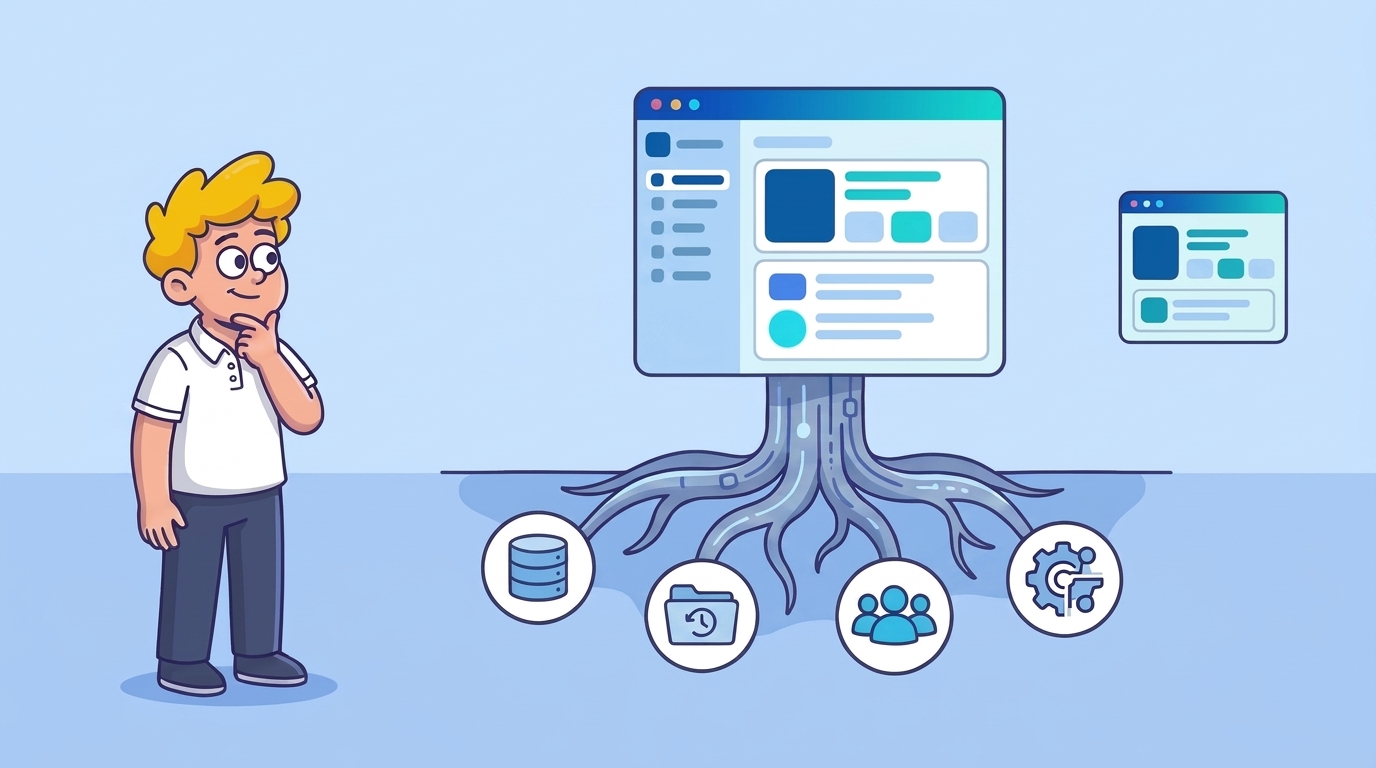
That matters because replacing the second product means more than finding a similar interface. The company has to migrate data, retrain people, reconnect integrations, reproduce permissions, rebuild process knowledge, and accept operational risk during the transition.
This is closely related to what Walling and Vollset describe as becoming the system of record.
A system of record is valuable because the product is no longer just displaying information. It becomes the trusted place where important business state lives.
For founders, the strategic question is:
If we disappeared tomorrow, what part of the customer's operation would stop working?
If the answer is “they would use another tool for that one feature,” the moat is weak.
If the answer involves reconstructing years of records, workflows, permissions, history, and integrations, you are in a much stronger position.
2. Switching costs should emerge from value, not captivity
Switching costs are often misunderstood.
Bad switching costs come from making cancellation painful, hiding exports, trapping data, or creating artificial friction. Those tactics can reduce churn temporarily, but they also damage trust.
Healthy switching costs emerge because the customer has accumulated legitimate value inside the product.
Over time, your SaaS may contain:
- historical customer records
- configured workflows
- custom fields
- team permissions
- automations
- integrations
- templates
- reporting history
- internal documentation
- operational habits
- trained users
- business rules
None of those things need to be deliberately hostile to create switching cost. The customer simply has more to replace because the product has become more useful.
This is why “we have more features” and “we are deeply embedded” are different strategic positions.
The first can be copied.
The second has to be rebuilt inside the customer's organization.
A good moat therefore often looks less like locking someone in and more like becoming increasingly expensive to remove because the product is carrying more of the customer's operational context.
3. Trust becomes more valuable as AI makes software abundant
When software is difficult to build, the existence of a functioning product is itself meaningful.
When software becomes easier to create, buyers need other signals.
Can I trust this company with payroll?
Can I trust it with patient data?
Will the service still exist in two years?
Will it handle a failure correctly?
Will support respond when something breaks?
Does the vendor understand our industry?
Has someone I trust already adopted it?
This is why Walling and Vollset's first moat is not simply “brand.” Their framing is that buyers know and trust you.
Trust is operational.
It can come from years of customer relationships, reputation inside a niche, partners who recommend you, a champion inside the buyer's organization, reliable support, security posture, or a track record of handling difficult situations.
AI can help a competitor generate a better landing page.
It cannot instantly generate five years of relationships with the same buyers.
That makes niche depth increasingly interesting for B2B SaaS. A founder who deeply understands one buyer group may have a stronger long-term position than a technically superior product trying to sell horizontally to everyone.
This connects directly to the assumptions founders should validate before development. If you have not yet defined the customer clearly, you also cannot know which forms of trust, workflow ownership, or defensibility matter in that market. We covered that earlier in 7 Assumptions to Validate Before Building Your SaaS MVP.
4. Permission and compliance can create real barriers
Some software cannot simply be replaced because another product looks better.
The vendor may need permission to move money, connect to regulated systems, access sensitive information, submit documents, issue certificates, interact with government infrastructure, or perform actions on a customer's behalf.
Walling and Vollset separate this into ideas such as “you're allowed to act” and “someone official already said yes.”
That distinction matters because approval is often expensive to recreate.
A new competitor may have excellent code but still need to complete security reviews, integrations, certifications, regulatory processes, banking relationships, platform approvals, or procurement requirements before it can perform the same job.
This is not an argument to chase regulation for the sake of having a moat.
Compliance can slow a company down and increase costs dramatically.
But when permission is genuinely required to create customer value, successfully navigating that environment becomes part of the product's defensibility.
The moat is not the PDF certificate on your website.
It is the accumulated capability that allows the company to operate where others cannot easily enter.
5. Network density can make the product harder to replace
Some products become more useful because other people are already there.
A marketplace with no sellers is not useful to buyers. A communication tool used by one employee has less value than one used by the whole team. A scheduling or collaboration product becomes harder to replace when customers, partners, employees, or external participants are already connected through it.
Walling and Vollset describe this simply as “everyone's already in it.”
This is one of the clearest forms of defensibility because the competitor cannot recreate the product's value by recreating the code.
They have to recreate participation.
But founders should be careful with the term “network effect.” Many SaaS products do not have one.
Inviting teammates does not automatically create a network effect. The important question is whether each additional participant increases the product's value for other participants.
If the value does not increase, you may simply have collaboration features.
That can still improve retention, but it is different from a true network-driven moat.
6. Learning loops may become one of the strongest AI-era moats
One of the most interesting moat categories in Walling and Vollset's discussion is “every customer makes you smarter.”
This is especially relevant to AI products.
Imagine two SaaS products use the same underlying model.
Product A sends a prompt to the model and returns the answer.
Product B captures whether the answer was accepted, edited, rejected, escalated, or corrected. It learns which outputs work for different customer types, stores structured context, improves routing, evaluates new model versions, and uses customer outcomes to improve future decisions.
Both products may use the same foundation model.
They do not have the same product.
The second product has a learning loop.
Over time, the important asset is not simply the model. It is the accumulated understanding of what good output looks like in a specific workflow.
This can include:
- historical outcomes
- customer corrections
- successful patterns
- benchmark datasets
- human review decisions
- workflow context
- failure cases
- evaluation systems
- domain-specific rules
The loop becomes:
usage → outcome → learning → better product → more usage
That is far harder to reproduce than “we use GPT-6” or “we added an AI agent.”
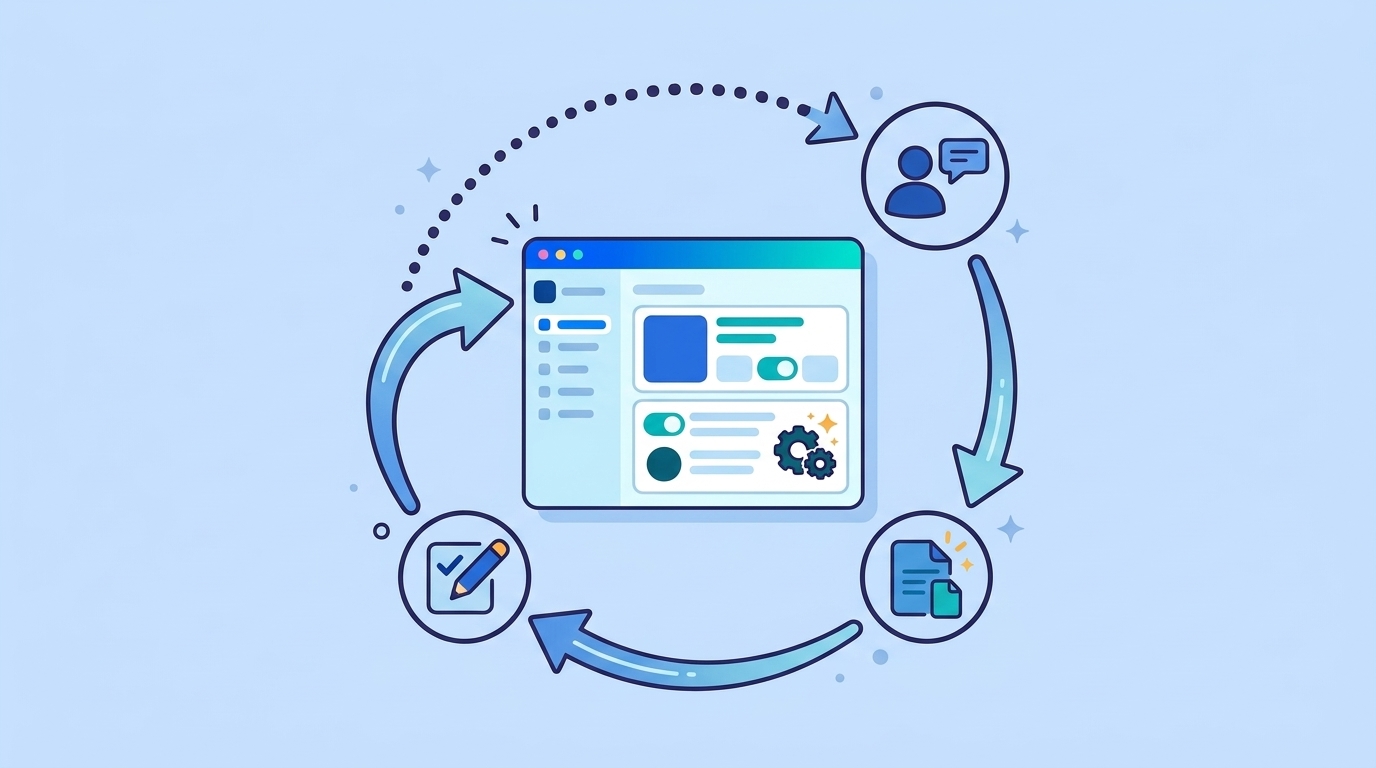
For AI SaaS founders, this is an important product design decision. If your system produces outputs but never captures whether those outputs were useful, you may be throwing away the very data that could make the product more defensible over time.
7. Operational difficulty can be a moat too
Some products are easy to build once and difficult to keep working.
Web scraping is a good example discussed in the episode. Creating a script that scrapes one page is relatively simple. Operating a reliable scraping service across thousands of sites, proxies, anti-bot systems, failures, infrastructure changes, and customer edge cases is a different business entirely.
Email delivery has similar characteristics. Sending an email is trivial. Maintaining reputation, handling abuse, managing infrastructure, staying out of spam folders, monitoring deliverability, and supporting customers at scale is not.
The moat comes from operational depth.
A competitor cannot simply clone the interface and inherit the years of systems, processes, incident experience, infrastructure, and institutional knowledge required to keep the service reliable.
This is easy to underestimate because operational capability is often invisible to the customer.
They see a button.
Behind the button may be a company that has spent five years learning how to make that button work reliably.
That invisible complexity can be very defensible.
You probably do not start with a moat
This is the part of the moat conversation that can become unhelpful for early-stage founders.
You have an idea, three customer interviews, and no revenue. Someone tells you that you need network effects, proprietary data, regulatory approval, switching costs, and a learning loop before you launch.
That is backwards.
Most strong SaaS companies do not begin with a mature moat.
They begin with a wedge.
A wedge is a narrow reason for one customer segment to adopt the product now. It solves a specific problem better enough that the customer is willing to try something new.
If the product succeeds, that wedge can expand into defensibility.
For example:
specific painful workflow → repeated usage → operational data → deeper automation → more workflow ownership → higher switching cost
Or:
niche expertise → customer trust → referrals → partner ecosystem → stronger distribution → lower acquisition cost
Or:
useful AI feature → customer corrections → proprietary evaluation data → better outputs → more usage → stronger learning loop
The first version does not need to contain the moat.
It needs to create the conditions from which a moat can grow.
This is also why validation still comes first. A defensible product nobody wants is still a failed product.
A practical SaaS moat audit
If your SaaS already exists, you can evaluate its defensibility without inventing a complicated scoring model.
Start with these questions:
If a competitor copied our visible features tomorrow, why would customers stay?
If the answer is mostly “our UI is nicer” or “we ship faster,” your advantage may be temporary.
Look for reasons tied to trust, workflow integration, accumulated context, data, community, approvals, or operational reliability.
Does the product become more valuable the longer a customer uses it?
Historical data, configurations, learned preferences, automations, reporting history, collaboration, and integrations can all increase accumulated value.
If month 24 feels almost identical to day one, the product may not be compounding much customer-specific value.
Do customers store something important with us?
Being the trusted system where important business state lives is different from being a thin interface over someone else's system.
Ask what would need to be reconstructed if the customer left.
Does usage make the product smarter?
If you operate an AI product, capture outcomes rather than only prompts.
Do you know when the system was correct? Do you know when a human changed the answer? Can those corrections improve the future product?
Are we embedded in a workflow or merely adjacent to it?
Products embedded in core workflows are usually harder to remove than optional tools used occasionally.
Map what happens immediately before and after your product is used.
Is there something difficult about operating this business that customers do not see?
Infrastructure, compliance, support processes, partner relationships, fraud prevention, deliverability, data operations, or domain-specific execution may all create hidden barriers.
What gets stronger with every new customer?
This may be the most useful question of all.
Does another customer improve your dataset, network, reputation, distribution, operational efficiency, partner ecosystem, or product intelligence?
If nothing compounds, competitors may be able to chase you indefinitely through feature parity.
A simple moat ladder for SaaS founders
Instead of asking whether your startup “has a moat,” think about defensibility as a progression.
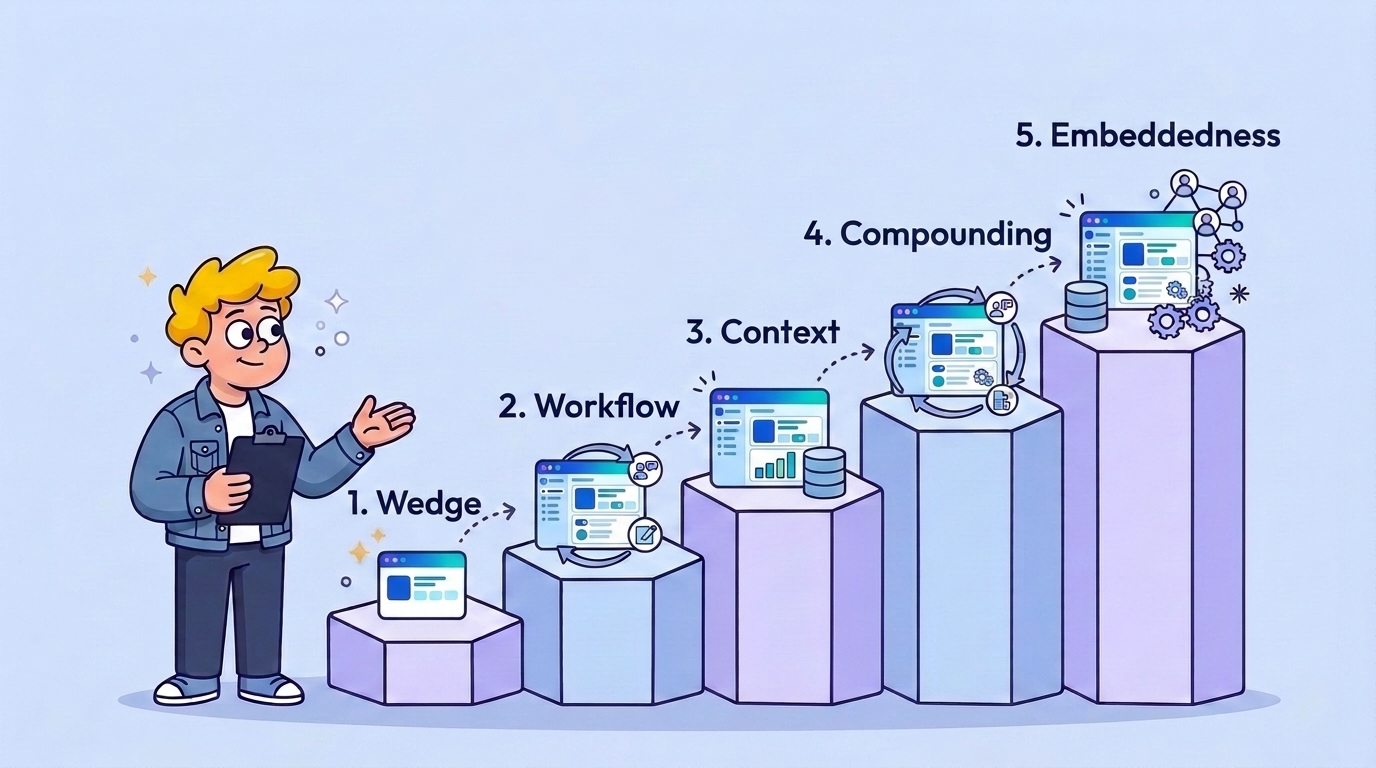
Stage 1: Wedge
You solve one painful problem for one specific customer segment.
At this point, your main advantage may simply be focus and speed.
Stage 2: Workflow
Customers begin relying on the product repeatedly, and you expand into adjacent steps of the job.
The product becomes part of how work gets done.
Stage 3: Context
The system accumulates customer-specific data, configuration, history, permissions, integrations, and business rules.
The product becomes harder to replace because it understands the customer's operation.
Stage 4: Compounding
Usage improves the product through learning loops, network participation, distribution advantages, operational efficiency, or accumulated trust.
Your advantage now grows with scale rather than resetting every time a competitor ships a feature.
Stage 5: Embeddedness
The product becomes sufficiently important that replacing it creates organizational risk, not merely inconvenience.
At this point, the company is no longer protected by one feature. It is protected by the system that has formed around the product.
Not every SaaS will move through these stages in exactly this order, and not every business needs every type of moat. The point is to understand whether your product is moving toward a stronger position or simply accumulating more features.
What AI changes about the moat question
AI does not eliminate SaaS moats.
It changes what deserves to be called one.
Code is becoming cheaper.
Interfaces are becoming easier to reproduce.
Generic AI capabilities are increasingly available to everyone.
Feature parity is arriving faster.
That pushes defensibility away from the surface of the product and deeper into the business.
The more interesting questions now are:
Who trusts you?
What workflow do you own?
What permission do you have?
What data and context accumulate?
Who else participates?
What do you learn from usage?
What is difficult to operate?
What becomes stronger every year you remain in the market?
Those are questions AI cannot answer simply by generating another codebase.
Frequently Asked Questions
What is a SaaS moat?
A SaaS moat is a durable advantage that makes the business increasingly difficult to replace or reproduce. Strong moats can come from workflow ownership, systems of record, trust, regulatory approval, network effects, accumulated data, learning loops, switching costs, or operational complexity.
A feature can create an advantage without creating a moat because competitors may eventually reproduce the feature.
Are features still a SaaS moat in the age of AI?
Usually not by themselves. Features still matter for customer value and differentiation, but AI-assisted development can make many features faster to reproduce.
A feature becomes more defensible when it creates something that compounds, such as proprietary workflow data, customer context, network participation, deeper integration, or a learning loop.
Does an early-stage SaaS need a moat before launching?
No. Early-stage founders should usually focus first on validating a meaningful problem and finding a narrow wedge into the market.
The more useful question is whether repeated customer usage can create stronger defensibility over time.
Is proprietary data a SaaS moat?
It can be, but simply storing data does not automatically create defensibility. The data becomes more valuable when it is difficult to reproduce and helps the product produce better decisions, automation, benchmarks, or customer outcomes.
A strong learning loop is often more useful than a large passive dataset.
Are switching costs bad for customers?
Artificial switching costs are bad. Hiding exports, trapping customer data, or making cancellation intentionally difficult damages trust.
Healthy switching costs emerge because the product accumulates legitimate value: history, workflows, integrations, configuration, business rules, collaboration, and operational context that would take effort to reproduce elsewhere.
Can AI itself be a SaaS moat?
Using an AI model is usually not a moat because competitors often have access to the same or similar models.
The stronger moat may come from what surrounds the model: proprietary context, feedback loops, evaluations, domain rules, customer outcomes, workflow integration, and operational systems that continuously improve how AI performs for a specific use case.
Which SaaS moat is strongest?
There is no universal strongest moat, and many durable SaaS companies combine several.
Rob Walling and Einar Vollset argue that learning loops are especially powerful because every customer can make the product smarter. In practice, the strongest defensibility usually depends on the market and the workflow the product serves.
Build Something That Gets Harder to Replace
The old SaaS playbook often rewarded teams that found a niche, shipped faster than incumbents, ranked well in search, and kept expanding the feature set.
Those things still matter.
But they are becoming easier for competitors to imitate.
The next layer of product strategy is not simply asking what you can build that others cannot build today. It is asking what will become increasingly difficult for them to reproduce tomorrow.
Maybe that is becoming the system of record.
Maybe it is a learning loop.
Maybe it is regulatory permission.
Maybe it is an ecosystem of participants.
Maybe it is operational complexity that customers do not want to manage themselves.
Maybe it is years of trust with a narrow buyer.
The important part is that the moat grows because customers use the product.
Your first release does not need a castle and a moat around it.
It needs a valuable wedge and a credible path toward something that compounds.
If you are still deciding what your first SaaS should solve and which assumptions deserve investment, start with 7 Assumptions to Validate Before Building Your SaaS MVP.
If the direction is validated and you need to turn it into a focused product plan, SaaSloom's SaaS MVP Plan helps define the customer, core workflow, MVP scope, product structure, and roadmap before development begins.